CBTHero
CBT Games for Therapists & Teens
Play solo at home or together with your therapist. Build thinking skills through fun, illustrated comic adventures.
No account needed. Therapists can also assign solo play as homework.
Therapist with a homework code from a client? View homework report →
How It Works
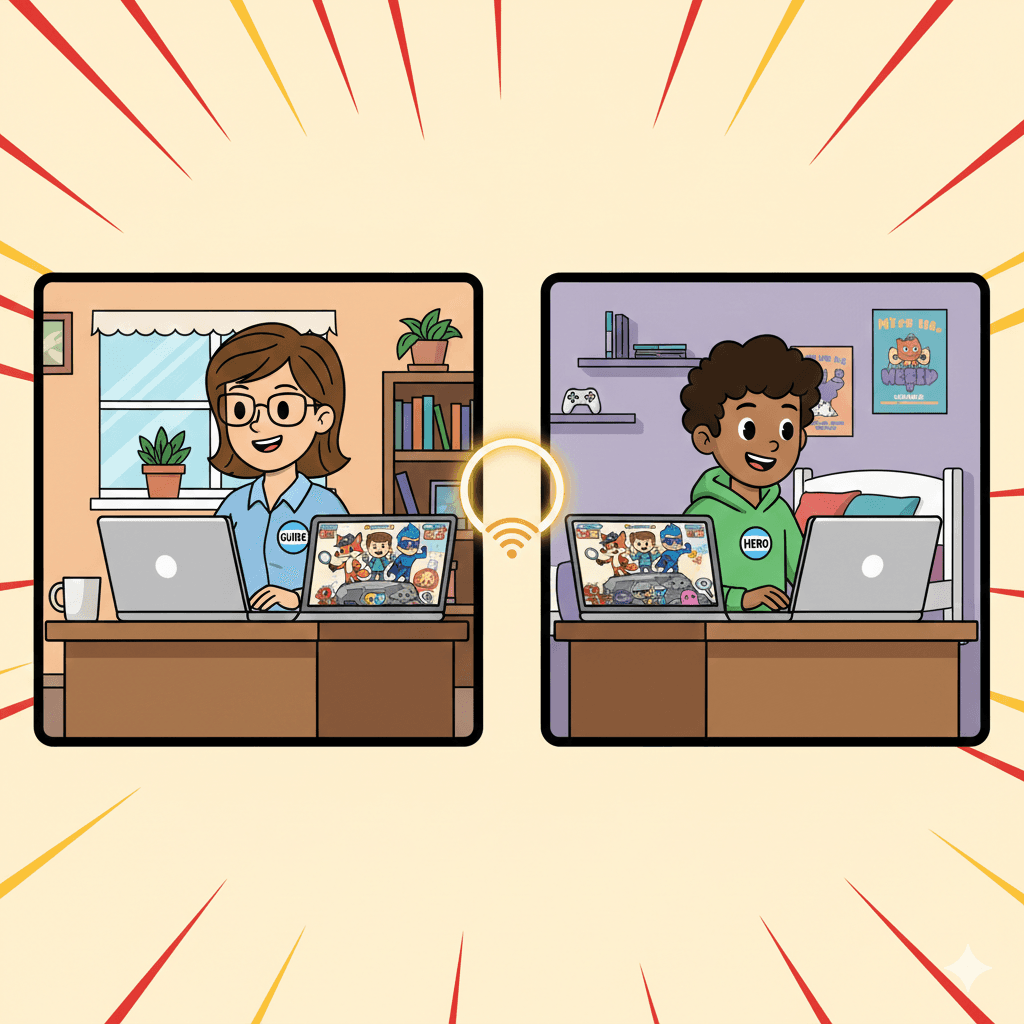
Designed for co-play during telehealth therapy sessions
Create a Room
The therapist creates a room and shares the 4-letter code with their client
Pick Roles
The kid plays as the Hero making choices. The therapist guides as the Guide
Play Together
Work through illustrated comic scenarios in real-time — each with their own view
A Real Game, Not a Quiz
Every scenario plays out like a graphic novel. Kids engage with illustrated characters, not boring worksheets.
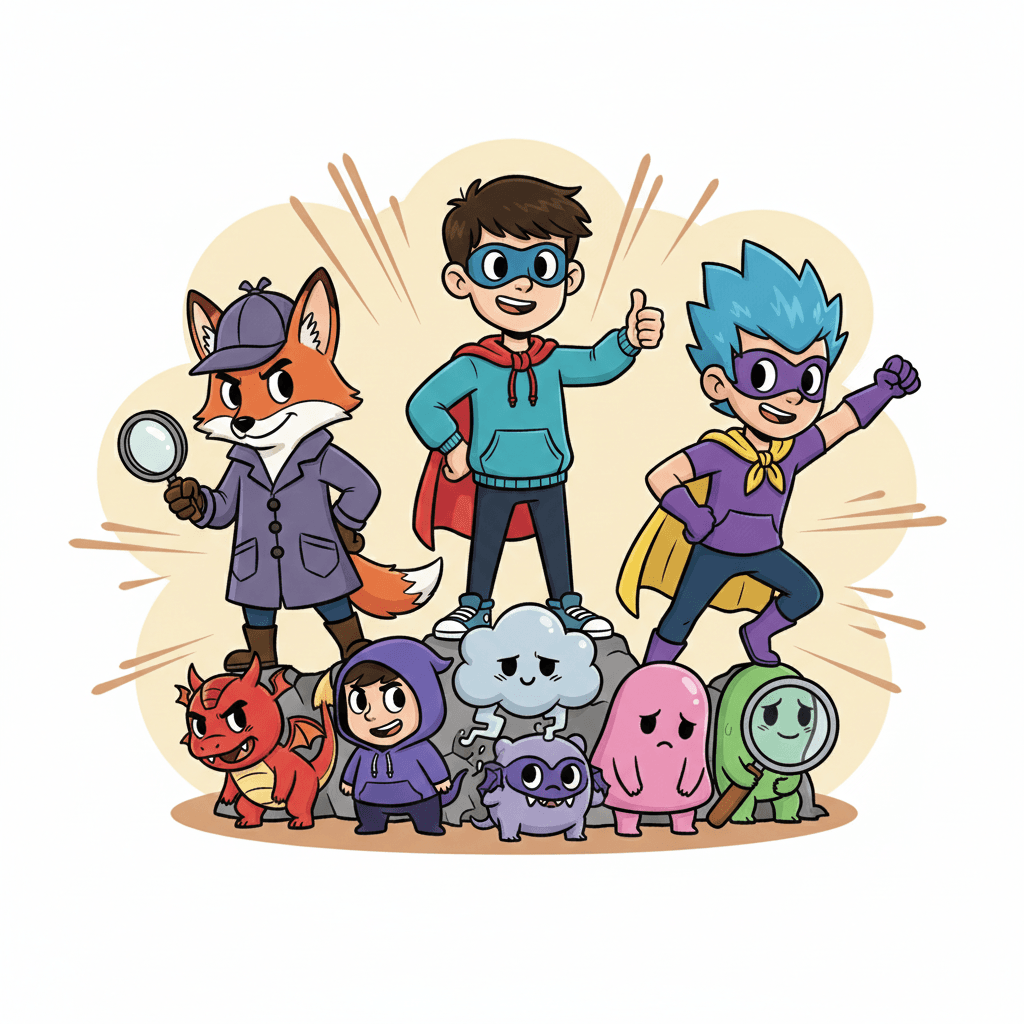
Illustrated Characters
Three playable heroes and six villain characters, all hand-illustrated in a kids' graphic novel style.
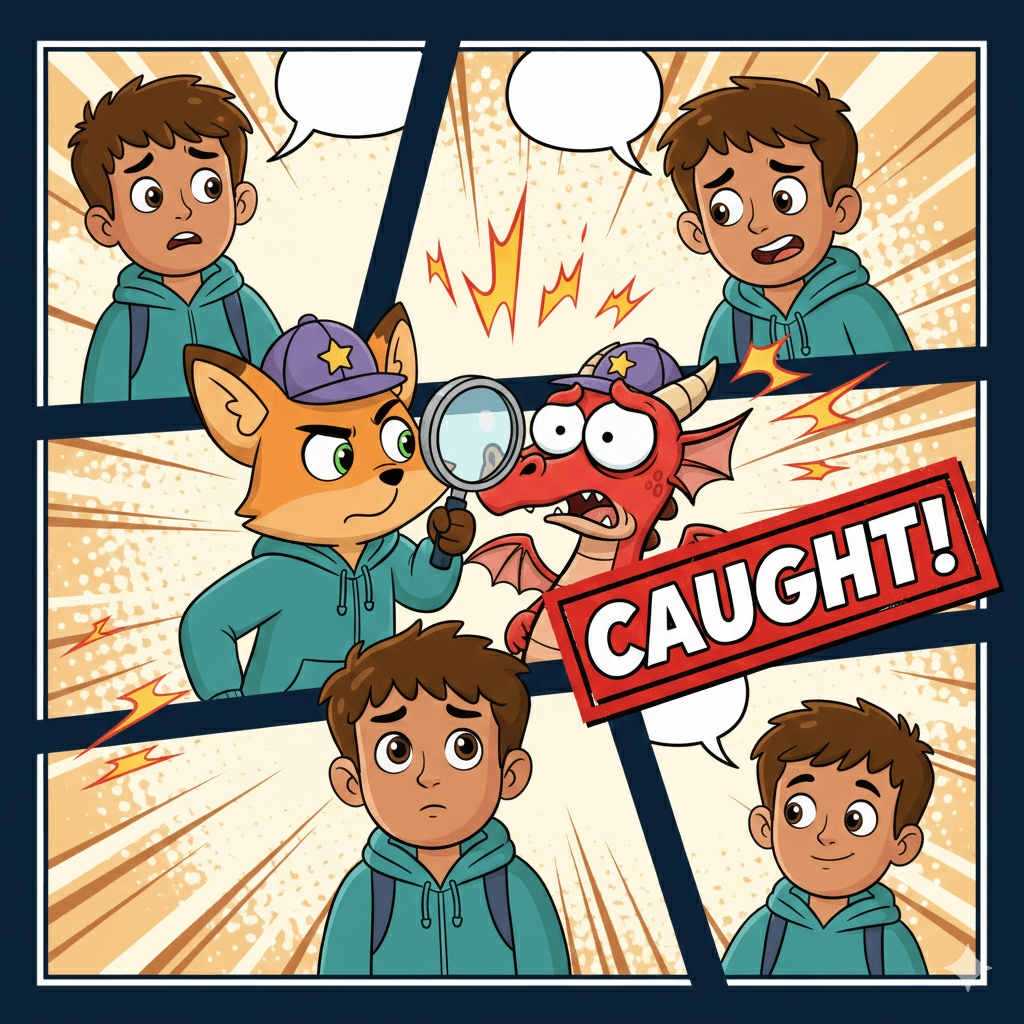
Comic Panel Storytelling
Each scenario unfolds as a graphic novel page with speech bubbles, scene backgrounds, and dramatic reveals.
Evidence-Based CBT
Built on proven cognitive behavioral therapy techniques from Dr. Daniela Owen's research with kids.
Real-Time Co-Play
Therapist and kid see synchronized views — the Guide can give hints and spark discussion at any moment.
Game Modules
Each module targets a different CBT skill. More coming soon!

Distortion Detective
Spot sneaky thinking traps and reframe negative thoughts

Story Splitter
Explore alternative explanations for tricky situations

The Gauntlet
Build frustration tolerance through challenging puzzles

Emotion Engine
Learn to recognize and manage emotional intensity

The Tower
Face fears one step at a time with guided exposure

Thought Forge
Craft balanced thoughts from negative ones
Built for Therapy
HIPAA-Friendly
No patient data stored. Everything runs in the browser.
Free to Start
Try all core modules free. Premium adds analytics and more.
Evidence-Based
Grounded in CBT research and real therapeutic techniques.
What is CBT Hero?
CBT Hero is a free, browser-based set of six cognitive behavioral therapy (CBT) games for kids and teens, roughly ages 11 to 14. Each game turns a core CBT skill — spotting thinking traps, reframing negative thoughts, naming and rating emotions, facing fears one step at a time, and managing frustration — into a short, illustrated comic-style adventure. Kids can play solo at home, or a therapist can co-play with them live over Zoom or Teams: the kid plays the Hero who makes the choices, while the therapist plays the Guide with a private answer key and discussion prompts. There is nothing to install, no account to create, and no patient data is stored.
Frequently asked questions
What is CBT Hero?
CBT Hero is a free set of six cognitive behavioral therapy (CBT) games for kids and teens that runs in any web browser. Each game practices one core CBT skill — like spotting thinking traps or reframing a negative thought — as a short, illustrated comic-style adventure. There is nothing to install.
Who is CBT Hero for?
Child and adolescent therapists, school counselors, and parents — and the kids themselves. It is designed for roughly ages 11 to 14. Therapists use it live in sessions, including telehealth; kids can also play on their own at home as therapy homework.
How do I play with my therapist (or my client) over Zoom or Teams?
The therapist creates a room and pastes the invite link into the video-call chat. The kid clicks it, types their name, and is in as the Hero — the one who makes the choices. The therapist plays as the Guide with a private answer key, hints, and discussion prompts, and controls when the game moves on.
Is CBT Hero free?
Yes. All six games are free to play, with no account required. A premium tier for therapists, with session analytics and more, is planned.
What CBT skills does it teach?
Distortion Detective teaches kids to identify cognitive distortions (thinking traps). Thought Forge practices building balanced thoughts. Story Splitter practices generating alternative explanations for a situation. Emotion Engine covers naming emotions, rating their intensity, and choosing coping strategies. The Gauntlet builds frustration tolerance. The Tower practices facing fears one step at a time using a fear-rating (SUDS) scale.
Is it private? What about HIPAA?
There are no accounts, and no patient data is stored on a server — the game runs entirely in the browser and therapists keep their own notes, which is why we describe it as HIPAA-friendly by design. Optional homework codes contain only a score and a topic category, never a name or anything a kid typed. Full details are on our Privacy page at cbthero.com/privacy.
Does CBT Hero replace therapy?
No. It is a tool for practicing CBT skills, best used alongside a therapist or as homework they assign. It is not a substitute for professional mental-health care, and it is not a crisis resource.
How does therapy homework work?
After a solo session, the kid answers three quick reflection questions and gets a short homework code. The therapist enters that code at cbthero.com/report to see how the session went, which scenario felt closest to real life, and tailored discussion prompts — and can launch that exact scenario for co-play in the next session.
What ages is it designed for?
Middle schoolers, roughly 11 to 14. Many therapists find it works with slightly younger or older kids too, depending on the child.